


Club Renewed learning
The Perfect Super-Curricular for Years 7-13
Weekly talks to inspire and challenge each student. In-depth courses to build valuable real-world skills. Professional advice on every major educational decision.

The Membership:
‘Get INspired’ Seminars
Thought-provoking online seminars delivered by experts from Oxford and Cambridge (with some special guests!).
Watch live every Thursday at 9:30am - 10:30am GMT (5:30pm - 6:30pm HKT), or 5:30pm - 6:30pm GMT.

‘Going Deeper’ Courses
8-week long courses of interactive online classes developing crucial skills to prepare students for the real-world.
Every Sunday live at 10am - 11am GMT (6pm - 7pm HKT).
Academic Support talks
Talks from our founders, Ed and Benedict, for students and parents to prepare for the next stage.
Regular Saturdays at 10am - 11am GMT (6pm - 7pm HKT).
So what’s included?
Everything! From just £80 / month (inc. VAT) you’ll receive access to all the above - that’s more than 10 hours of fantastic live content every month. You’ll also be able to catch up on recordings on every single one of our past events in the Video Library.
Cancel anytime. No hidden fees.
Sign up below, or keep scrolling to see some of our upcoming events!
Upcoming ‘Get Inspired’ Seminars
Fascinating seminars, delivered by experts - live every Thursday, and available on demand.
Current ‘Going Deeper’ Course - Public Speaking

Stanley Stott-Hall, from Oxford University, is leading our Public Speaking Course.
This consists of 8 interactive classes, starting on Sunday 5th January and ending on Sunday 23rd February, at 10am-11am UK time and 6pm-7pm Hong Kong time.
Upcoming Academic Support Talks
Catch up on all past events in our Video Library

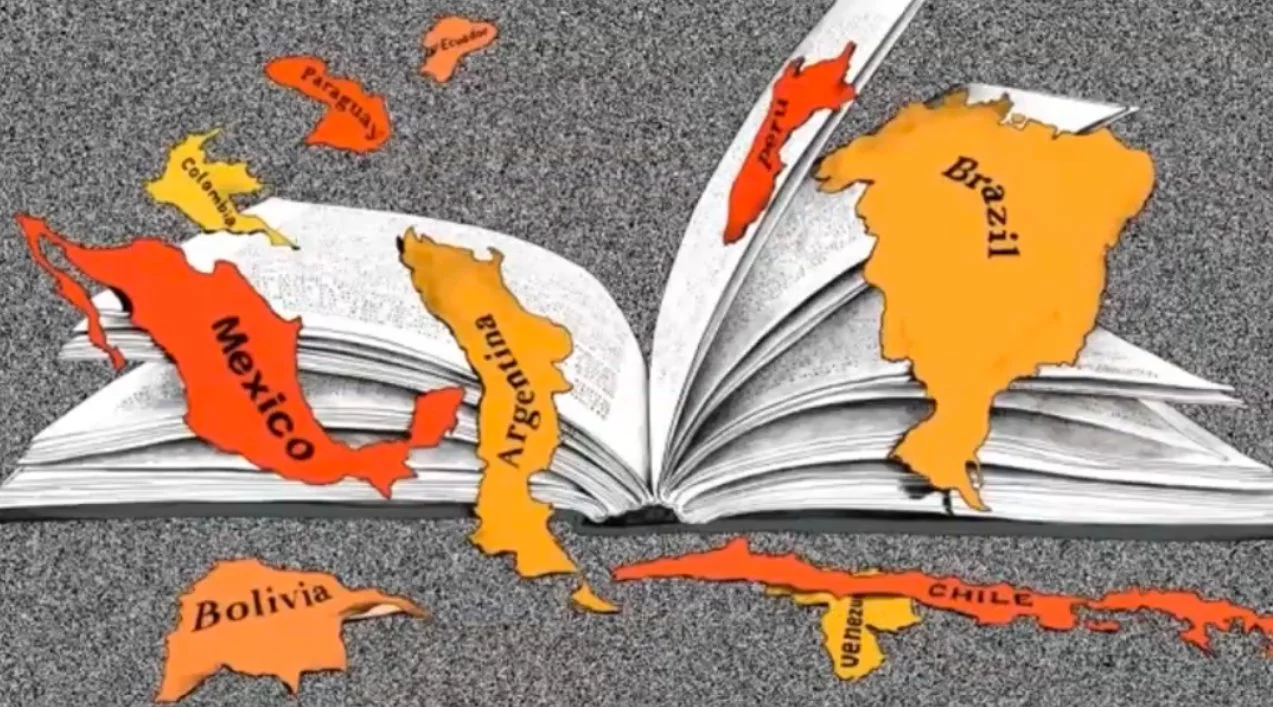
This seminar explores magical realism, a Latin American literary genre that blends fantasy with the everyday to critique history and politics. Through Isabel Allende’s La casa de los espíritus and Elena Garro’s Los recuerdos del porvenir, participants will examine how these works portray political and patriarchal oppression in contexts like Pinochet’s Chile and 1920s Mexico.
This seminar is delivered by Historian and Linguist from Oxford University, Nikita Nunes.
This seminar explores magical realism, a Latin American literary genre that blends fantasy with the everyday to critique history and politics. Through Isabel Allende’s La casa de los espíritus and Elena Garro’s Los recuerdos del porvenir, participants will examine how these works portray political and patriarchal oppression in contexts like Pinochet’s Chile and 1920s Mexico.
Ideal for students of Spanish, History, and Politics, the session highlights how literature can challenge historical narratives. With an interdisciplinary focus, it encourages critical thinking about the relationship between novels and their sociopolitical contexts, offering fresh insights into modern history and beyond.
Students looking to explore this area further could look at:
Cohn, Deborah – ‘To See or Not to See: Invisibility, Clairvoyance and Re-visions of History in La casa de los espíritus’ - specific to magical realism
Swanson, Phillip, Latin American Fiction: A Short Introduction

This seminar is delivered by History MPhil graduate from Oxford and former Oxford Boat Club President Ella Stadler.
How did women go from being excluded from the Olympic Games to smashing records on the world stage? This talk uncovers the history of gender in sport, tracing the struggles and triumphs of female athletes. From gender verification controversies to landmark achievements, learn how societal and institutional barriers have shaped—and continue to challenge—the world of women’s sport.
This seminar is delivered by History MPhil graduate from Oxford and former Oxford Boat Club President Ella Stadler.
How did women go from being excluded from the Olympic Games to smashing records on the world stage? This talk uncovers the history of gender in sport, tracing the struggles and triumphs of female athletes. From gender verification controversies to landmark achievements, learn how societal and institutional barriers have shaped—and continue to challenge—the world of women’s sport.
Stanley Stott-Hall begins our 8-week Public Speaking Course! One of the most important skills young people can develop, this course will examine all aspects of confident speaking, from Presenting and Speeches, to the Art of Debating.
Stanley Stott-Hall begins our 8-week Public Speaking Course! One of the most important skills young people can develop, this course will examine all aspects of confident speaking, from Presenting and Speeches, to the Art of Debating.
This seminar is delivered by Human Scientist from Oxford, Alfie Dry.
From the blockbuster Jaws to sensationalised news stories, sharks are often painted as bloodthirsty villains, feeding into widespread panic and calls for mass cullings.
This seminar is delivered by Human Scientist from Oxford, Alfie Dry.
From the blockbuster Jaws to sensationalised news stories, sharks are often painted as bloodthirsty villains, feeding into widespread panic and calls for mass cullings. When a fatal attack occurs, a local shark population purge is often the legalised response, furthering the mistaken belief that sharks are an enemy.
A new suggestion, however, posits that ‘problem sharks’ (which behave more aggressively and target humans) are not just a horror movie trope. Aiming to reduce mass slaughterings and improve the public perception of sharks as a species, this theory suggests that only these rare erratic individuals need to be identified and eliminated.
Through the lenses of biology, psychology, and media studies, we’ll explore how our perceptions of sharks are shaped and what’s at stake for conservation. Is the theory of the ‘problem shark’ a dead end? Or could it provide a new insight into the world under the waves?

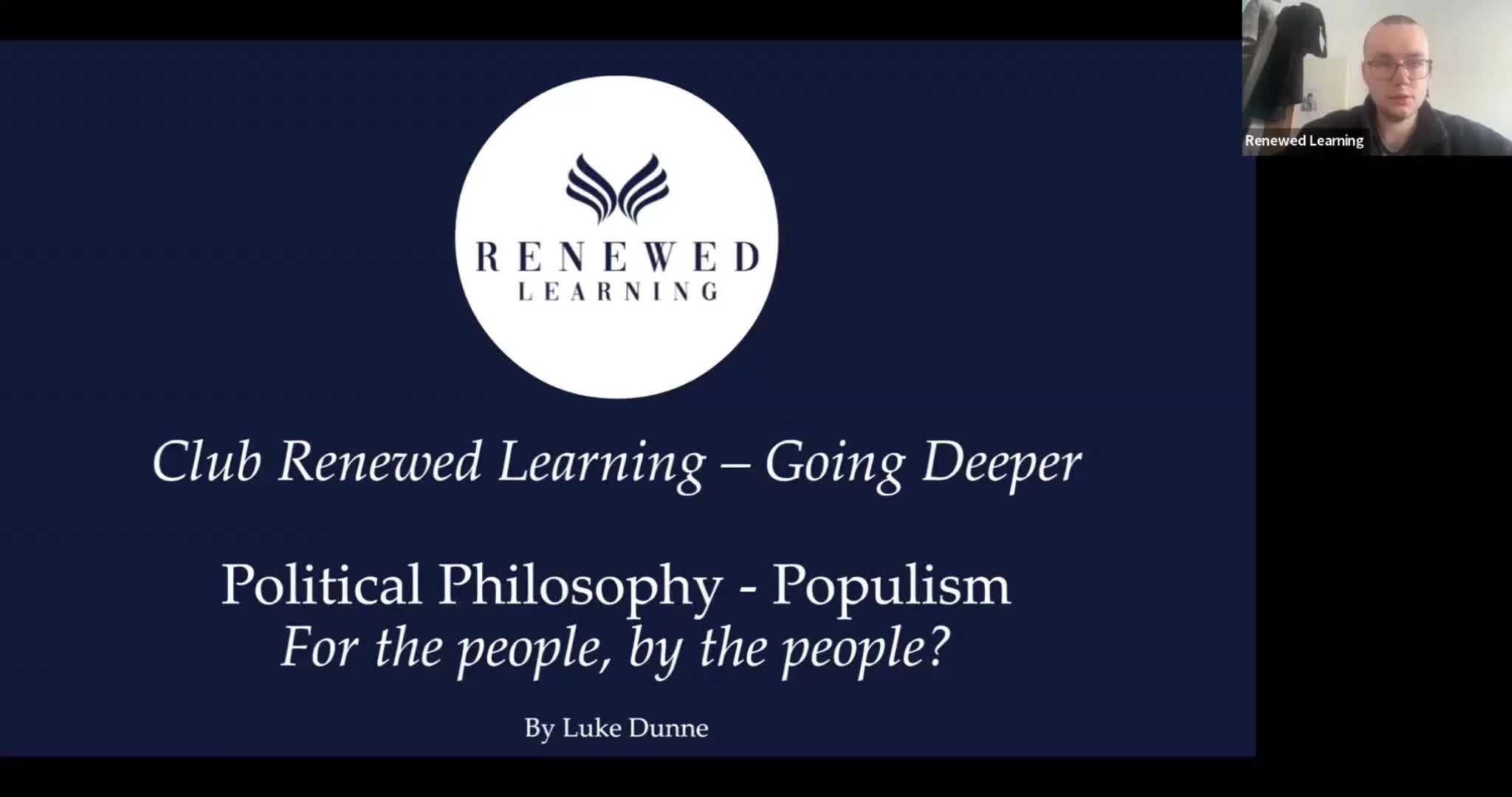
In final class of the wonderful Political Philosophy series, Luke Dunne focuses his attention on feminism.
The discussion will include the history of feminism, both in theory and practice, as well as some of the differences between feminist positions today. We’ll also discuss the influence feminism has had on politics in general by drawing attention to the way politics influences our personal lives.
In final class of the wonderful Political Philosophy series, Luke Dunne focuses his attention on feminism.
The discussion will include the history of feminism, both in theory and practice, as well as some of the differences between feminist positions today. We’ll also discuss the influence feminism has had on politics in general by drawing attention to the way politics influences our personal lives.

Phoebe Reid delivers a masterclass helping students to understand the nuances of one of the most pressing global issues - climate change.
Phoebe Reid delivers a masterclass helping students to understand the nuances of one of the most pressing global issues - climate change.
The wide-ranging seminar approaches this familiar issue in a variety of new and exciting ways. First, a closer analysis of the science behind climate change and a deeper look at the chemistry of molecular warming. Then Phoebe will consider the effects on entire landscapes and ecosystems, before narrowing down to the effects on organism functioning. There will also be a series of nature-based solutions to this vast problem that faces humankind.

Ed Newall and Benedict Yorston, the founders of Renewed Learning, deliver a presentation helping parents and students to mitigate the stress of revision, whilst maximising the efficacy and efficiency of revision.
Ed Newall and Benedict Yorston, the founders of Renewed Learning, deliver a presentation helping parents and students to mitigate the stress of revision, whilst maximising the efficacy and efficiency of revision.
In the penultimate talk of the Political Philosophy series, Luke Dunne considers the theory and history of socialism.
In the penultimate talk of the Political Philosophy series, Luke Dunne considers the theory and history of socialism.

Shiv Kapila explores the concept of estimation, a simple topic in GCSE Maths, yet one which is phenomenally important and routinely underestimated.
Borrowing from his PhD in Aerospace Engineering, Shiv takes estimation and ensures that students no longer confuse it with ‘guessing’, but instead learn about the mathematical necessity of estimation and its profound role across the world.
Shiv Kapila explores the concept of estimation, a simple topic in GCSE Maths, yet one which is phenomenally important and routinely underestimated.
Borrowing from his PhD in Aerospace Engineering, Shiv takes estimation and ensures that students no longer confuse it with ‘guessing’, but instead learn about the mathematical necessity of estimation and its profound role across the world.
Further exploration links:
Universe size comparison: https://www.youtube.com/watch?v=8Are9dDbW24
Powers of ten: https://www.youtube.com/watch?v=0fKBhvDjuy0
Fermi estimates: https://fermi-questions.andrechek.com/
Improving at solving fermi estimates: https://scioly.org/wiki/index.php/Fermi_Questions
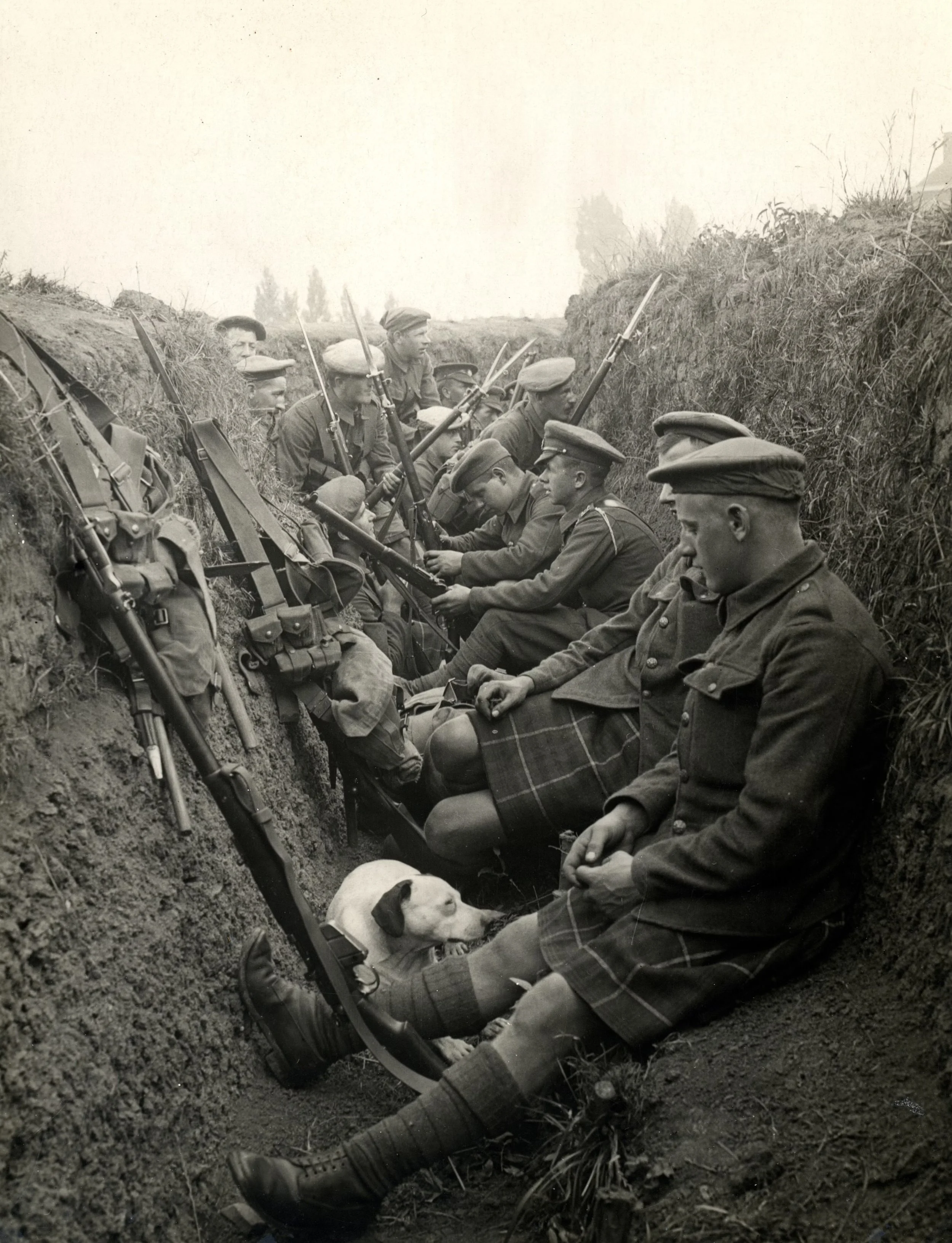
Luke Dunne uses the sixth session of the Political Philosophy series to discuss the ethics of war and peace by considering a series of historical conflicts, as well as controversies of war.
Luke Dunne uses the sixth session of the Political Philosophy series to discuss the ethics of war and peace by considering a series of historical conflicts, as well as controversies of war.

Benedict Yorston, Physics and Philosophy at Oxford University, explores the concept of time. What is it, and do we establish our understanding from the laws of physics, or the thinkings of philosophy?
Benedict Yorston, Physics and Philosophy at Oxford University, explores the concept of time. What is it, and do we establish our understanding from the laws of physics, or the thinkings of philosophy?

In the fifth part of this series, Luke Dunne introduces the justice system, with a focus on criminal justice in particular.
In the fifth part of this series, Luke Dunne introduces the justice system, with a focus on criminal justice in particular.

Alice Lock discusses literary criticism and explores how to understand literature beyond the scope of school academics.
Alice Lock discusses literary criticism and explores how to understand literature beyond the scope of school academics. This leads to questions over why certain authors or texts are considered more valuable than other, and indeed, assessing the very purpose of literature.
For those interested in further exploration of this area:
- Aristotle’s Poetics is super easy to read and a great start.
- Barthes’ essay ‘Death of the Author’ is classic
- Saussure ‘Course in General Linguistics’
- Rivkin and Ryan’s ‘Anthology of Theory’ is a great starting point for people looking to get a wide view of theory as it exists.
- Cixous’ ‘Le rire de la méduse’ (Laugh of the Medusa) is an ideologically central and very beautiful account of écriture féminine
- If the Victorian theory mentioned interests you, then Ruskin and Pater are the classics there
- Terry Eagleton is a very famous and well regarded Marxist critic, with a colloquial and exciting style

Luke Dunne returns for the fourth episode of the Political Philosophy series, and picks up another key political idea - equality.
Luke Dunne returns for the fourth episode of the Political Philosophy series, and picks up another key political idea - equality.

Yasmin Ratcliffe, Medic from Oxford University, explores the science of the brain, and how idiosyncrasies in our neural networks can affect our vision.
For students who enjoy this Seminar, some further reading might include:
- The Man who Mistook his Wife for a Hat (by Oliver Sacks)
- Researching the binding problem, or the dopamine theory of Schizophrenia
Yasmin Ratcliffe, Medic from Oxford University, explores the science of the brain, and how idiosyncrasies in our neural networks can affect our vision.
For students who enjoy this Seminar, some further reading might include:
- The Man who Mistook his Wife for a Hat (by Oliver Sacks)
- Researching the binding problem, or the dopamine theory of Schizophrenia

In the third part of Luke Dunne’s series on Political Philosophy, he focuses on a core political idea - freedom.
In the third part of Luke Dunne’s series on Political Philosophy, he focuses on a core political idea - freedom.

Finn Gavin, our Head of Medicine, delivers a talk expertly summarising the application process for studying Medicine at university - from students thinking of applying, all the way to UCAT exams and interviews.
Finn Gavin, our Head of Medicine, delivers a talk expertly summarising the application process for studying Medicine at university - from students thinking of applying, all the way to UCAT exams and interviews.

Nadia Roeske, Arabic at Oxford University, uses the Arabic language to explore Middle Eastern culture to give students an insight into the rich historical and cultural tapestry of the region.
Nadia Roeske, Arabic at Oxford University, uses the Arabic language to explore Middle Eastern culture to give students an insight into the rich historical and cultural tapestry of the region.

Luke Dunne’s second talk on Political Philosophy uses the recent U.S. election as a vehicle to discuss the process of democracy.
This session will analyse the results, talk about how elections are won and lost, as well as discussing some less well understood components of the democratic process, including the role of the media, lobbying and the judiciary.
Luke Dunne’s second talk on Political Philosophy uses the recent U.S. election as a vehicle to discuss the process of democracy.
This session will analyse the results, talk about how elections are won and lost, as well as discussing some less well understood components of the democratic process, including the role of the media, lobbying and the judiciary.

Sara Al Soodi, Historian from Oxford University, delves into Britain’s historical role in the Middle East and how their decisions might have permanently changed the region.
Sara Al Soodi, Historian from Oxford University, delves into Britain’s historical role in the Middle East and how their decisions might have permanently changed the region.